
How to Sew Patches on Different Types of Jackets
So you have finally found the patch that makes the jacket feel like yours, and now you wonder whether it’ll peel off after a few washes or the threads will snap the first time you shrug on the jacket.
A poorly attached patch can easily spoil the appearance of an otherwise excellent jacket. In reality, getting it to stay on is not about being a professional seamstress. It is about a couple of simple habits. Let’s break down exactly how to get it right.
What You’ll Actually Need
There is no need to have the equipment that a tailor would use. Just a few items can be enough for most jackets:
- The patch
- A sturdy needle
- Thread that can take some strain
- A small pair of scissors
- Pins or fabric clips
- A thimble, especially if the jacket is thick
- Chalk or a washable marker for positioning
- Somewhere flat to work
If you wish for your stitching to correspond with the edges of the patch, then make use of the same colour thread as the patch. But in case you intend to have the stitching visible, then you may go ahead and use a contrasting thread.
How to Get the Placement Right?
That’s the step everyone rushes to get through, and that’s also the most important one. Get the jacket on first, or just spread it out on the table, and place the patch in its place. Then step back. Look at it from a few angles. Something that looks perfectly centred on a table can sit crooked once the jacket’s actually on a body.
Take a moment to notice what’s around it:
- Pockets
- Seams
- Buttons and zippers
- Any other patches already there
- The natural drape of the jacket
- How it looks when you’re actually wearing it, not just holding it up
When you feel it’s correct, hold it in its place with either pins or clips. You should also leave a good amount of space if you are near a seam. You might discover that sewing through one of the thick seams is challenging.
Sewing a Patch Onto Denim
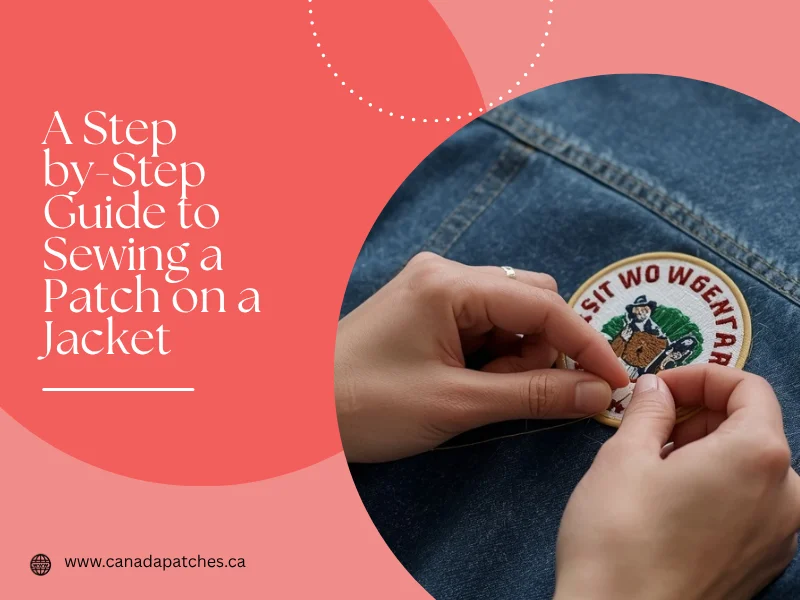
Denim is a great fabric for patch sewing because it’s heavy duty and takes stitching well. Thread your needle, make a knot and start your work from the inside of the jacket if possible. Push the needle through both the denim and the patch near the margin. Continue in the same manner until you finish the patch.
Sewing a Patch Onto Leather
This material requires another kind of patience. Once the hole is made, it will be there forever. Hence, this is not the fabric to experiment with. Place the patch precisely in its place before sewing any stitches. Clips will be more helpful compared to pins because pins will just give your leather unwanted holes. Do not tighten the thread too much. If your leather is expensive, you can seek services from a professional tailor or a Canada patch maker for a cleaner and safer finish.
Sewing a Patch Onto Canvas or Work Jackets
Canvas or work clothing is strong, but its strength makes hand stitching somewhat of a physical task. Position the patch, stitch around it with small and tight stitches and be careful at the corners. Corners tend to be the first things to lift off a jacket that is washed often or worn badly. Stitching these places a second time provides reliable protection without the work appearing untidy.
Which Stitch Should You Use?
A basic running stitch works well for most thin patches. For thicker borders, either a whipstitch or edge stitch will be more durable. In truth, the stitch choice is less important than these three aspects:
- The stitches are secure.
- They sit close enough together to hold the edge flat.
- The thread is tied off properly at the end.
If you are dealing with sew on patches Canada, opting for sturdy thread and making sure that the stitching is closer to the edges of the patch will definitely help in achieving a neat look. This does not require special embroidery abilities.
How to Get the Professional-Looking Finish?
It is usually the little things that set the professional patch apart from the homemade one and not necessarily skill at the sewing machine.
- Measure the placement before you commit
- Keep the patch straight
- Choose thread that suits the border
- Aim for even stitches
- Don’t pull so tight that the fabric puckers
- Tie off the thread properly
- Give the corners a closer look
- Check everything again after the first wash
In fact, you shouldn’t hurry up when placing the patch because the time spent thinking about the exact spot where it should be placed will save you hours of removing the stitches afterward.
Readers Usually Ask
Is it possible for me to sew a patch on any jacket?
The majority of fabrics work quite well, including denim and canvas pieces or work clothes and most types of leather jackets.
Is it better to sew or iron on a patch?
When it comes to choosing between sewing and ironing, the preferable method is to sew it on, as this method is better used over a long period of time. On the other hand, ironing a patch is a good option, but it can weaken over time and with heat.
Can you sew a patch on leather?
Sewing on leather is the same as with any material, but slightly more challenging. If a needle is used, it makes holes in the leather. In addition to that, it is also important to place a patch properly.
What thread works best?
Something strong enough to handle the patch’s weight and the everyday movement of the jacket. Matching it to the patch border keeps the stitching subtle.
How can you stop the corners from lifting?
This means giving the corners their own care and attention rather than expecting the straight edges to do it for you. A few additional stitches in that area can be very effective, especially on a garment you wear frequently.
In Conclusion!
Putting a patch over a hole in your jacket isn’t easy, but if you know how to do it, you won’t find it hard at all. This entails picking out a good needle and thread, positioning the patch well and then stitching it along its edges. There are different ways of doing it on denim, canvas and leather jackets, but the overall process remains the same. Don’t forget that inserting your personality into your clothes is more likely to be done if you take care of the position of the patch and the sewing.

I am the creative voice behind CanadaPatches.ca, turning complex patch designs and branding ideas into simple, easy-to-follow solutions. My blogs explain customization processes, material choices, and ordering tips in a practical way. I focus on helping businesses and individuals build strong brand identities. My goal is to make custom patch creation clear, confident, and stress-free.