
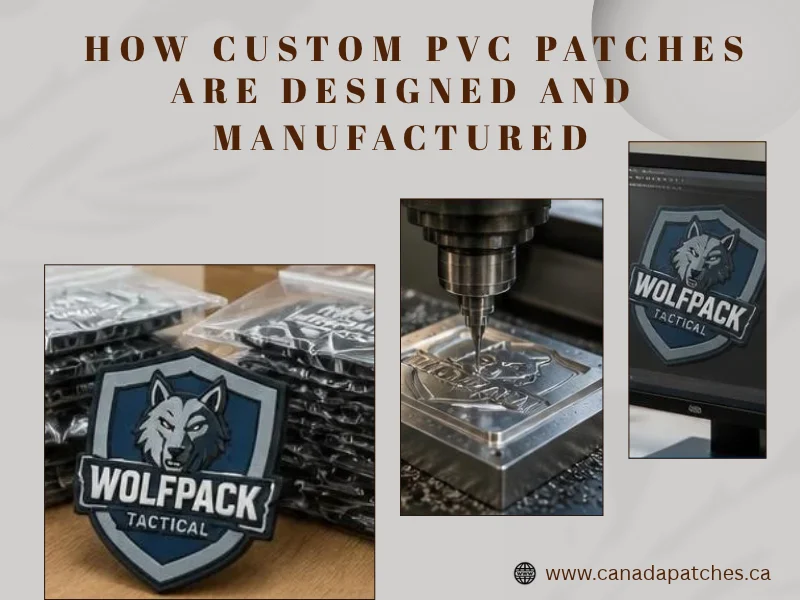
How Custom PVC Patches Are Designed and Manufactured
Interested in the manufacture of PVC patches? Learn about the entire process, starting from design preparation, molding, material application, coloring, and finishing, to see how these durable and attractive patches are created.
From Digital Design To Finished PVC Patch Production
A patch can feature a logo, name, symbol, or message; however, have you ever thought about how patches are created before being placed on a jacket, backpack, hat, or uniform? The production of PVC patches is a systematic process that takes a digital image to a flexible and raised patch.
In contrast to printed patches, PVC patches are crafted using layers of PVC materials and molds. Each step has its function, ranging from preparation of the artwork, color application, and inspection of the patch itself.
The process might be complex, but it is not as difficult as it seems, and each step requires precision for an effective result. Knowing this process helps you better understand why PVC patches are so popular in personal use, team wear, businesses, and outdoors.
Create Artwork That Works Well As A Patch
The first thing in designing Custom PVC patches Canada is preparing an art piece. The design provides the manufacturer with instructions on the shape, text, graphics, colors, and the raised sections of the patch.
The use of PVC enables the designer to incorporate sharp forms and raised graphics, but the artwork must be appropriate for manufacturing. If there are very fine details or dense typography, they may need modification to make them visible when the material is molded.
When the artwork is completed, it is then evaluated for its size, proportion, and placement of colors. This will help avoid any design errors later on in the process.
Turn Digital Artwork Into A Precise Mold
When the art is approved, the design is used for the creation of the mold. The mold will determine the shape and texture of the finished patch.
Each section of the design is allocated on the mold so that the colors and textured parts can be properly positioned. The shape can be either simple, such as a circle or square, or can follow the outline of logos, characters, symbols, or other artworks.
This process is vital as the mold determines the physical appearance of the patch. The good preparation of the mold helps keep the edges neat and the correct placement of the design features.
Build A Strong Base That Holds The Design
This step involves placing the PVC material in the mold. PVC is a plastic material that is soft and can be molded using pressure and heat.
The base layer acts as the main structure of the patch. It gives the product thickness and forms the hard surface that will enable other layers to be designed on it.
Material is carefully placed such that it fits into the intended spaces within the mold. This forms the basis for the coloring and detailing to be done.
Add Colors Without Losing Design Clarity
After making the basic framework, different PVC colors are then used based on the design. Each color will be in its own unique location.
Material is put into the mold very carefully so that the color stays in its place. This ensures that the logo, letters, borders, and symbols are visible in the patch.
The number of colors used varies according to the design. Some patches have just one or two colors, while others have more than two colors.
Cure The PVC For A Durable Finished Shape
Once the colors and layers have been applied, the material has to be cured. During the curing phase, the material will harden and assume its final shape.
Most manufacturers use heat as part of the manufacturing process to ensure that the layers of PVC harden well. The method employed for curing may vary depending on the manufacturer and the type of patch being made.
Curing is an essential step since it determines the strength, flexibility, and finish of the patch. Without proper setting of the material, the final product may fail to acquire its final form.
Choose A Backing That Makes Application Easier
The backing is another crucial element of the final patch design. It defines how the patch will be mounted on the jacket, bag, uniform, cap, or any other fabric surface.
The most common types of backing are hook-and-loop, adhesive, or sewing backing types. The choice of the type of backing will depend on the final use of the patch.
The choice and application of the backing come after the production of the PVC structure. This will result in a completed patch that will be ready for use.
Keep Production Practical Without Losing Quality
The production process may change depending on the design, number of patches needed, and the finish that is desired. This way, companies will be able to manufacture patches of various designs to fit different budgets and applications.
Cheap Canada patches could be an effective solution for budget-conscious customers who want to decorate their garments, bags, work uniforms, or other things with customized graphics and avoid complicated decorations.
Having a clear design is usually more helpful than incorporating extraneous information. Even an uncomplicated patch using clear forms and legible letters could be quite professional-looking and appealing.
Why PVC Patches Have A Distinctive Finish
The manufacturing process gives PVC patches their distinct look from other patches made from fabric. The flexibility of the plastic creates a smooth surface, with molding used to create more textures.
Moreover, because of its nature, the patch can have sharp outlines and letters as well as colored sections. All of this makes patches very distinctive without needing too much detail in the design.
Since the patch is manufactured and not just printed on the fabric, the resulting product is quite durable. Therefore, PVC can be used to make patches that can be used for various purposes such as clothing, gear, luggage, and uniforms.
More Details About PVC Patch Production
Are the PVC patches made of plastic material?
Yes, because PVC patches are manufactured using a flexible plastic substance called polyvinyl chloride, which can be molded and made in various colors, thicknesses, and raised features.
Can PVC patches have several colors?
Yes, because multiple colors of PVC patches can be used in a single patch, where each color is positioned in a predetermined area of the mold to form the desired design.
Why do PVC patches have raised features?
Raised features are formed by using the molding process and layers of PVC patches, which make the letters, logo, border, and other symbols easily noticeable.
Are PVC patches flexible?
Yes, but the amount of flexibility varies based on the patch’s thickness and design. Usually, thin patches will be more flexible than thick ones.
What kind of backings do PVC patches have?
Different types of backings are used for PVC patches, such as sewing, adhesive, or hook-and-loop backings. It all depends on what the patch is to be used for.
Conclusion
The creation of a PVC patch includes several linked steps which start with designing and end with quality control of the final product. The design is made first and transformed into a mold, which determines the geometry and relief of the patch.
The PVC material is applied to the patch in layers; the colors are applied with care, and finally, the patch is cured to give it its final shape.
Although the process is time-consuming and must be done carefully, the end product will be a flexible, organized patch with a unique and clean look. Knowing about this process will also assist purchasers in selecting the right design for their patches.

I am the creative voice behind CanadaPatches.ca, turning complex patch designs and branding ideas into simple, easy-to-follow solutions. My blogs explain customization processes, material choices, and ordering tips in a practical way. I focus on helping businesses and individuals build strong brand identities. My goal is to make custom patch creation clear, confident, and stress-free.