
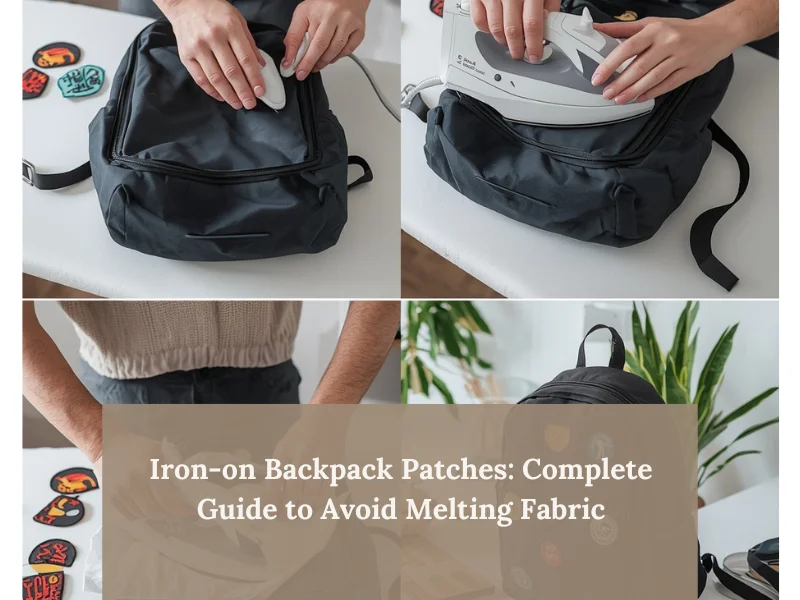
How to Put Iron-on Patches on Backpacks: The Complete Guide
Ironing a patch onto a backpack is straightforward when the fabric is right and the method is correct, but backpacks are more varied in material than most garments, and choosing the wrong approach for your specific bag can damage both the patch and the pack.
Before you get started, it’s important to know what material your backpack is made of so you won’t have to go through the frustrating process of doing it all over again.
The answer to all your questions will be answered by the end of this blog, everything from what materials work to what tools you’ll need, the entire step-by-step process, so you get the best result.
Why Backpacks Are Trickier Than Regular Garments for Patch Application
A backpack is not a piece of fabric that is flat. It is seamed, padded, has internal frames, and may contain a combination of materials on various panels. All of this will affect the transfer of heat and the bond’s strength.
The most important variable is the outer fabric. Custom Patches Toronto work well with canvas and cotton backpacks. Most synthetic backpacking materials, like nylon and polyester, are where the real trouble lies; these materials melt easily and can warp, glaze, or permanently deform when subjected to direct heat. Before buying the backpack, it is essential to know what type it is.
Check Your Backpack Material Before You Do Anything Else
Flip over your backpack and check for a care label, typically stitched into a pocket or down an inside seam of the backpack. An iron should not be used if it is labeled “dry clean only,” “no heat,” or contains nylon or polyester as the main fabric. You will need to find another way to attach it.
Canvas, cotton duck, and heavy woven fabric backpacks are the most suitable for iron-on application. They contribute to the ability to withstand moderate heat without warping and provide the adhesive with a strong textile surface for bonding.
If you’re not sure about your fabric, iron it for a short time on an inconspicuous interior seam first, and if it changes texture or sheen, stop immediately!
What You Need Before You Start
Tools and Materials
If you get everything ready before you start, you won’t run around looking for something when you’re working on it while the iron cools down.
- Your patch has an iron-on adhesive backing.
- Household iron with the steamer turned off; water tank drained.
- A pressing cloth, thin cotton pillowcase, tea towel, or sheet of parchment paper to protect the backpack fabric.
- A firm, flat surface such as a wooden table or ironing board. Do not press the soft back panel of the backpack directly.
- A piece of cardboard to place inside the backpack to stop the adhesive from sticking to the inside layer or to the other panel.
Choosing the Right Spot on Your Backpack
The placement is more important on a backpack than on a jacket since the surface is not smooth and the bag will move continually during use. The front panel is the steadiest surface and is best suited for most patches. Don’t put patches directly on seams, zips, or spaces that are heavily compressed when the bag is full.
Curved surfaces, such as the top of a rounded front pocket, are a bit more difficult because the iron can’t apply pressure evenly across the patch at once. In these areas, apply pressure in sections and increase the pressure on the edges as they are the first to rise when under stress.
Step-by-Step: How to Apply the Patch
If your materials are ready and your placement is confirmed, please proceed in the following order.
- Step 1: Place the cardboard right behind the patch area in the backpack. This will stop the adhesive from dripping through the inner fabric or holding the layers of fabric together.
- Step 2: Position the patch face up on the backpack in the desired location. Before heat is applied, make sure it aligns.
- Step 3: Place your pressing cloth over the patch; the patch and backpack must not come in direct contact with the iron.
- Step 4: Set the iron to a medium-low heat setting. No steam. Press down firmly on the pressing cloth for 15-20 seconds. The adhesive is activated by holding it straight down, not by sliding the iron.
- Step 5: Remove the iron, slowly lift the ironing cloth, and inspect the sides of the patch. If the corners are lifting, take out the pressing cloth and press firmly for 10 seconds at those corners.
- Step 6: Do not touch the patch until it is fully cooled (at least 2 minutes). The adhesive hardens when it cools down, and the most frequent patch failure is when the backpack is moved before it has cooled down.
What to Do When Your Backpack Cannot Take Heat
Fabric Glue as a Reliable Alternative
Flexible fabric glue can be used as a good substitute for ironing with synthetic fabrics, such as nylon or polyester. Spread a fine, even outline around the outer edges of the patch and a few dots in the center. Press down and let dry for 24-48 hours.
A flexible glue will not cause the backpack to crack when flexing. If a permanent hold is desired, make a few hand stitches around the edges after the glue is completely hardened.
Hand Sewing for Maximum Long-Term Hold
The most durable way to apply a patch is by sewing. A whip stitch or running stitch around the full perimeter is suitable for heavy loading, washing, and years of daily use.
Custom iron on patches are faster to use as a temporary solution, but sewing is better for long-term use when stress is applied frequently, for instance, in a school bag or for a company bag.
FAQs
Can I iron a patch onto a nylon backpack?
No. Nylon is meltable when exposed to a hot iron. If you need to affix the patch to the backpack, you can use flexible fabric glue or hand-sew it on to get a more permanent hold.
My patch is peeling at the edges after a few washes. What went wrong?
Insufficient heat or pressure failed to activate the glue. Reapply with firmer pressure and a thinner cloth, or hand-stitch the edges for a permanent fix.
Can I put multiple patches on the same backpack?
Yes, but only one at a time. Every patch should have its own pressing and cooling cycle to guarantee even heat distribution and a strong and consistent bond.
Take It Slow, and the Result Will Last
There are only three things to keep in mind when it comes to applying a patch to a backpack well: know your fabric, always use a pressing cloth when applying a patch, and allow the adhesive to cool completely before using the bag again. Follow the steps in order, do not rush the cool-down, and if the heat is not right for your backpack, choose the sewing or glue method without compromise. If done right, a good patch will remain in the same place years later.

I am the creative voice behind CanadaPatches.ca, turning complex patch designs and branding ideas into simple, easy-to-follow solutions. My blogs explain customization processes, material choices, and ordering tips in a practical way. I focus on helping businesses and individuals build strong brand identities. My goal is to make custom patch creation clear, confident, and stress-free.