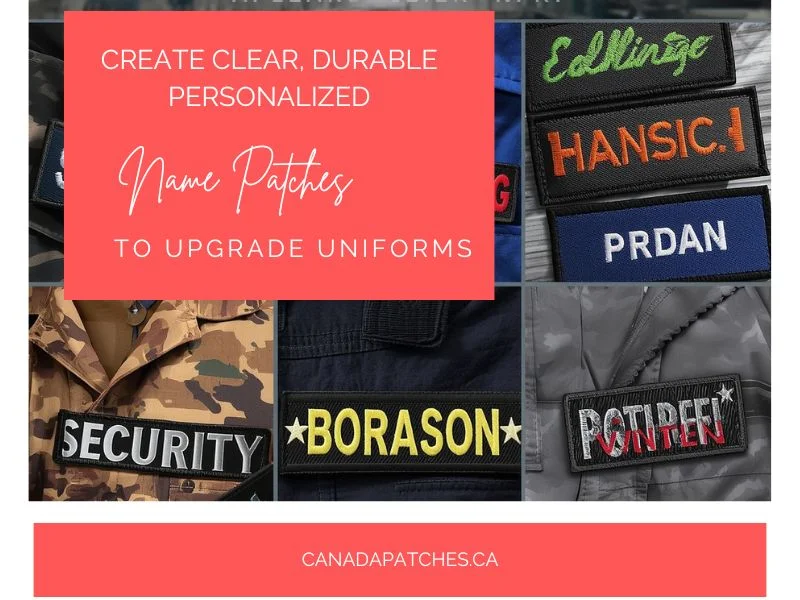
How to Make Personalized Name Patches for Uniforms
Personalized name patches are one of the simplest and most effective ways to give a uniform a professional, finished look and making them work well comes down to understanding your material, your attachment method, and what the patch actually needs to survive in the environment where it will be worn.
A well-made name patch serves several purposes, whether you are outfitting a sports team, a hospitality staff, a security team, or a workplace environment in which staff identification is important. It lets people know who they are conversing with, helps to build team identity, and brings a touch of refinement to a plain uniform.
Why Name Patches Work Better Than Printed Alternatives for Most Uniforms
Printed name tags can get lost, misplaced, or damaged. Names embroidered directly onto garments will be permanent, but they can make the repurposing of garments more difficult when staff changes. A sewn or attached name patch is tough enough to last for months and months, yet easy to remove or replace if names change.
Canadian Patches are much more useful than either alternative in situations where staff rotation, seasonal employees, or frequent staff changes are a reality in the operation. The base uniform remains in service. The only thing that changes is the patch.
Choosing the Right Base Material for Your Name Patch
The look, durability, and attachment method will vary depending on the material that your name patch is constructed from. There are three of the most popular ones with different profiles.
Woven Patches
Coloured threads are used on a loom to create woven patches. Their smooth surface and flatness are ideal for fine text and small lettering and are the standard choice for highly readable name patches. The final surface is compact, clean, and will not fray or fade with repeated washings.
Embroidered Patches
Embroidered patches are stitched onto a fabric base, creating a raised, textured look. They are of good quality and will last long under harsh conditions, but are hard to read when very small text is used, due to the minimum size of the stitches. Embroidery is great for short names in a large font size. For long names in a limited size, woven is the more effective option.
PVC Patches
PVC patches are not stitched, but are moulded with soft rubber. Waterproof, extremely durable, and maintaining their shape even in extreme conditions, they are a good choice for outdoor workers and emergency services. Text should be reasonably bold because fine details will not work well in the moulding process.
Designing the Patch: What Makes a Name Patch Easy to Read and Professional
Typography and Legibility
Communication is the sole purpose of a name patch. The font should be the key element of the design, and the rest of the design should be based on legibility.
Clean, sans-serif fonts are easiest to read, especially at small sizes, in bold or medium weight. Script fonts may be beautiful to the eye on a computer screen, but can be hard to read from afar or in dim light. For something unique, a slightly more stylish, but still legible typeface is the best alternative.
The height of the letter is also important. In general, text should not be smaller than 6mm. The letters below that may merge if they are produced in a particular manner.
Select A Patch Shape, Size and Colour
Rectangular and oval are the most frequent shapes. Rectangular patches fit in perfectly with uniform items such as breast pockets and collar lines. Oval shapes look more relaxed and are better suited for hospitality, healthcare, and customer service positions.
The size is usually determined by the length of the name. A patch should be large enough to allow for visual breathing room so that the name is visible. Adults’ names can be presented on a patch between 3 and 4 centimetres high and 10 and 14 centimetres wide.
Colour is essential for text contrast against the background. Both light text over a dark background and dark text over a light background types are reliable. Do not use combinations that do not have enough contrast, such as navy text on a black background. If you’re not sure, test the mix at the actual size before running a full production run.
Attachment Methods: How to Fix the Patch on the Uniform
Permanence, cleanness, and ease of replacement depend on how the patch is attached.
Sewing
It is the longest-lasting method. The patch is secured, and the garment flexes naturally without lifting or warping by using a whip stitch or a running stitch. Sewing is the right solution for uniforms that need to be washed often and used hard. More time is involved, but it lasts forever.
Iron-On Backing
It is the easiest choice for uniforms made of heat-resistant fabric. The adhesive gets activated by heat and sticks to the fabric when ironed. They should stay in place with normal washing, but may come out over time, especially when used on synthetic materials or washed at high temperatures. A few hand stitches will make them last much longer.
Hook-And-Loop Fasteners (Velcro)
It works best for patches that are to be frequently changed. It creates a secure bond with the uniform, but can be removed cleanly with the loop side attached to the uniform and the hook side to the patch. This is the regular practice for the military, tactical uniforms, or any work environment where there is a high turnover of staff.
Ordering Name Patches in Canada: What to Know Before You Start
What Information to Provide When Ordering
There are several things to consider before ordering Name Patches Canada. An unambiguous brief is time-saving and error-proof. When you’re ready to get in touch with a supplier, you should have the following ready:
- Names: Spelling of names to be reproduced; check spelling carefully.
- Size: Width, height, and shape (rectangular or oval).
- Background colours: Background and text colours, with Pantone references (if available).
- Font: Give the name of the font or describe the style to the supplier’s designer.
- Attachment: Iron-on, sew-on, or hook-and-loop – as it will impact production.
- Quantity: The total amount you need and how much time you have.
When ordering for the first time, ALWAYS order a physical sample before approving a full production. The colours can appear different in a screen preview than when the patch is finished, and it’s much cheaper to spot problems early.
FAQs
How long do name patches typically last on a uniform?
Patches properly attached will remain on the uniform for its entire life. Embroidered and woven patches will not fade or fray after hundreds of washings. PVC is even longer-lasting. Sewn patches are better in high-wash environments.
Can name patches be removed and reused on a different uniform?
Yes. Hook and loop patches easily and efficiently remove and replace. Seam rippers can be used to take the patch off, but it is time-consuming. Iron-on patches are the most difficult to remove without leaving a residue on the garment.
What is the minimum order quantity for name patches in Canada?
Most Canadian suppliers will ask for 12 to 24 units to cover their setup fees, like loom setup or embroidery digitising. Some suppliers will quote smaller minimums or single patches at a higher unit rate for small teams and replacements.
Final Thoughts
Name patches are a seemingly insignificant detail, but they are important. They introduce staff to their customers and colleagues. They make sure that an organisation values its presentation. When they are constructed and installed properly, they last when even a low-quality option would fail within a matter of weeks. Ensure the material is appropriate for the setting, consider legibility upfront, ensure the attachment is suitable for the uniform’s actual wear, and have the uniform supplied by a company that can deliver it to a consistent standard. From there it’s easy.

I am the creative voice behind CanadaPatches.ca, turning complex patch designs and branding ideas into simple, easy-to-follow solutions. My blogs explain customization processes, material choices, and ordering tips in a practical way. I focus on helping businesses and individuals build strong brand identities. My goal is to make custom patch creation clear, confident, and stress-free.