
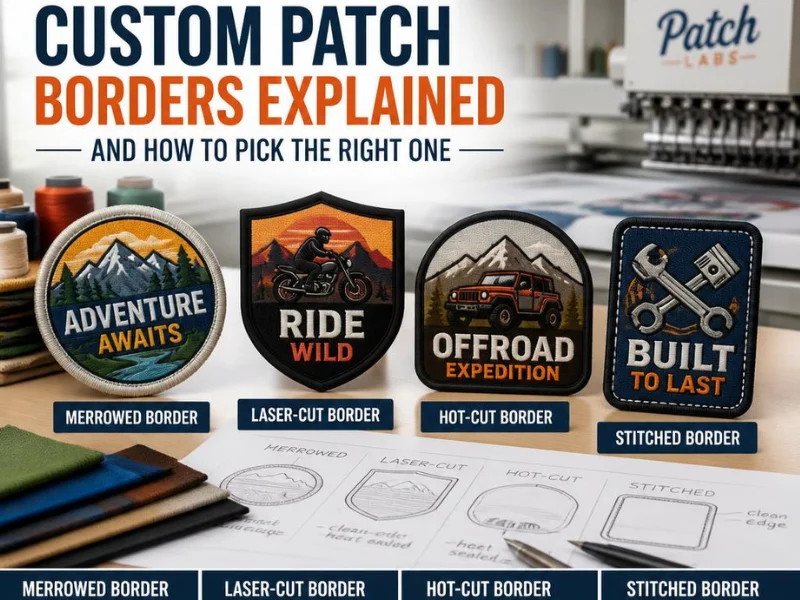
How to Choose the Right Border for Custom Embroidered Patches
Most people spend days perfecting their patch design that includes thread colors, size, and stitch detail, then pick a border in thirty seconds flat. It feels like a finishing formality, but it isn’t.
The border determines how the patch sits on fabric, how clean the edge looks up close and how long it holds up after repeated wear and washing. A wrong choice doesn’t just look off. It peels, it puckers, and it makes a well-designed patch look cheap. Everything you put into the design gets undermined by one rushed decision at the end of the order form.
What a Border Actually Does To Embroidered Patches
A border isn’t there to look pretty. It seals the embroidery edge, prevents the threads from fraying, and gives the patch a defined shape that holds over time. Without the right border, the patch loses its structure. Edges lift, corners curl, and the whole thing starts looking worn before it even gets washed twice.
The type of border you choose also affects how the patch attaches to the garment and how it behaves on different fabrics. That’s why it’s a functional decision first and a visual one second.
The Main Border Types Explained
Before placing an order, it helps to know what you’re actually choosing between. Each border type serves a specific purpose and performs better in certain situations than others.
Merrowed Border
The most common border on embroidered patches. It’s a thick rolled thread edge that wraps around the outside, giving it that classic raised finish most people recognise. Durable and clean, it works best on simple shapes like circles, rectangles, and shields.
Hot Cut and Laser Cut
A hot cut uses heat to seal the edge flat with no raised thread, making it ideal for complex or irregular shapes. Laser cut takes this further. The edge is cut and sealed with precision, which means it can follow tight curves and fine design details without losing definition. If your design has details running close to the edge, laser cutting is the cleaner choice.
Iron-On and Overlocked
- Iron-on border seals the edge while the heat-activated backing lets you press it directly onto fabric. No sewing needed but check fabric compatibility first.
- Overlocked edge sits flatter and softer than merrowed, giving the patch a more casual textile feel suited to softer garments.
Matching the Border to Your Use Case
The border that works on a jacket won’t necessarily work on a tote bag. Use case should drive the decision more than personal preference.
| Garment / Use | Best Border Choice | Why |
| Jacket or uniform | Merrowed | Holds shape through heavy use and washing |
| Bag or accessory | Hot cut or laser cut | Cleaner edge on irregular surfaces |
| Kids’ clothing | Iron-on | Easy application, no sewing required |
| Sport or workwear | Merrowed or overlocked | Durability over repeated wear |
| Soft casual garments | Overlocked | Sits flat without stiffening the fabric |
Sport kits and team uniforms are a good example of where this decision carries real weight. A Canada patch on a hockey jersey or a football kit needs a border that survives a season of use not just a few washes. Merrowed holds up in that context because the rolled edge resists lifting even under friction and repeated laundering.
The same logic applies to workwear and branded uniforms. The garment takes more abuse than everyday clothing, so the border needs to match that demand rather than just look good at the point of order.
What Most People Get Wrong
Most border mistakes don’t show up in the preview. They show up once the patch is on the garment.
Choosing Merrowed on a Complex Shape
Merrowed borders are built for clean, simple outlines. Push them onto a detailed or irregular shape and the rolled edge starts to distort, pulling the design out of proportion at the corners.
Ignoring Fabric Compatibility
Iron-on borders need heat to bond properly. Ordering them without checking whether the fabric can take that heat is one of the most common mistakes at the order stage — and one of the least reversible.
Getting the Border Width Wrong
A border that’s too wide on a small patch overwhelms the design. Too narrow on a large patch and it looks unfinished. Border width should be proportional to the patch size, not left at the default setting.
Quick Check Before You Order: Does your shape suit the border type? Is your fabric compatible with the attachment method? Is the border width proportional to your patch size?
When sourcing embroidered patches Canada, buyers often skip these checks at the order stage, assuming the supplier will flag issues. Most won’t. so the decision is entirely yours before the order is confirmed.
FAQs
Which border lasts the longest?
Merrowed is the most durable option for regular wear and washing. It holds its structure longer than flat-sealed borders on standard garments.
Can I use a merrowed border on any shape?
Not really. Merrowed works best on simple, clean outlines. Complex or irregular shapes need a hot cut or laser cut border to maintain definition at the edges.
Does border type affect how the patch attaches?
Yes. Iron-on borders come with heat-activated backing built in. All other border types need sewing or a separate adhesive backing added at the order stage.
Make the Border Part of the Decision
The design gets the attention but the border is what makes it last. A patch that holds its shape, sits clean on the fabric and survives real use doesn’t happen by accident. It comes down to one decision most people make in thirty seconds. Take the border as seriously as the rest of the order. Match it to the garment, check the compatibility and get the width right before confirming. That’s the difference between a patch that looks good on arrival and one that still looks good a year later.

I am the creative voice behind CanadaPatches.ca, turning complex patch designs and branding ideas into simple, easy-to-follow solutions. My blogs explain customization processes, material choices, and ordering tips in a practical way. I focus on helping businesses and individuals build strong brand identities. My goal is to make custom patch creation clear, confident, and stress-free.