
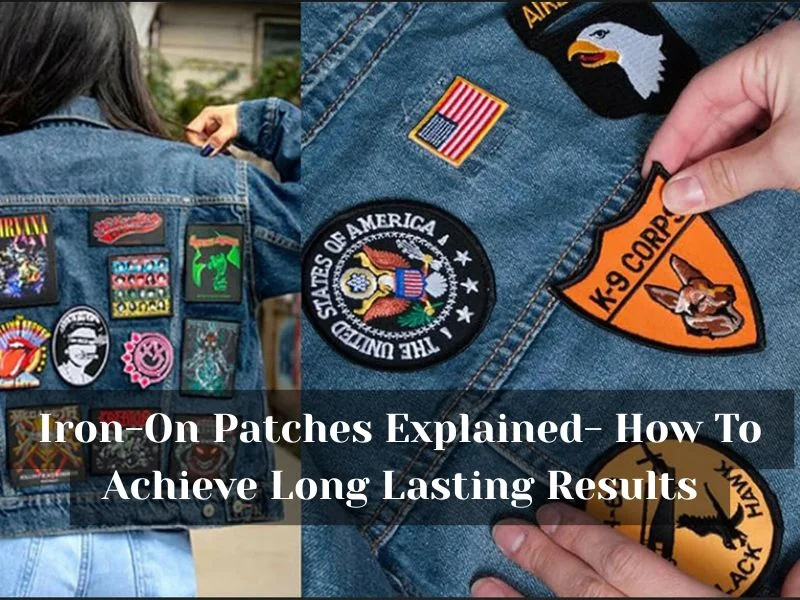
The Ultimate Guide To The Perfect Application Of Iron-On Patches
Iron-on patches are one of the most convenient and creative ways to customize clothing items, accessories, and uniforms.
From quickly repairing apparel to customizing your favorite bags, this type offers an instant solution for all your needs.
And the great part is? You don’t even need any sort of skills to add a bold statement to your clothing items!
Just stick it on and upgrade the style of anything in your wardrobe!
But is it only about pressing an iron? Nope!
The process requires some precise actions to ensure that your patches stay secure, flat, and the most professional!
Keep reading to learn how you can achieve perfect results every time!
What Are Iron Patches?
Iron-on patches are customized fabric designs that can be easily attached to fabrics with the use of heat.
They are used for decorating, repairing, and bringing a unique style to the outfits. These patches come with a heat-activated adhesive backing that melts and attaches to the clothing items.
Patches are most commonly used on:
- T-shirts
- Hoodies
- Denim
- Caps
- Backpacks
- Uniforms
Their versatility makes them one of the most used items for styling in 2026!
But the best part? These decorative fabric emblems come in various styles! You can choose the one that perfectly with your fashion needs.
Let’s take a look at them:
| Woven patches | Give a smooth finish, used for logos and detailed designs. |
| Printed patches | Lightweight and vibrant designs, best used for events. |
| Embroidered patches | Give a textured, durable, and classic look. Best for jackets and denims. |
| PVC patches | Soft plastic material that is waterproof, giving a modern appearance. |
| Chenille patches | Give a soft, raised, and vintage style. Made up of yarn loops. |
All of these patches offer a perfect blend of ease of application and strong adhesion through iron-on backing. This makes them an ideal choice for both DIY projects and professional settings.
Selecting an appropriate patch type ensures better attachment and more polished outcomes.
But along with the design, there is something more. The quality of your patch. This is what matters the most.
So make sure to order your Iron on patches Canada from a reputable service provider who prioritizes quality and reasonable rates!
The Best Fabrics For Iron-On Patches
Before deciding on the application method, you need to know which fabrics will accept the patch happily! Moreover, their ability to withstand high levels of heat is what will make them an ideal choice.
Natural or thick fabrics are the most suitable for iron-on patches. These include:
- Cotton
- Denim
- Canvas
- Polyester Blends
- Twill
Fabrics that are not suitable include:
- Silk
- Nylon
- Leather
- Rayon
Tools Needed For Iron Patch Placement
Here is what you will need to apply and place the patch correctly:
| Iron | Household iron set to its highest setting. Avoid the steam setting. |
| The patch | It should have a heat-activated adhesive backing. |
| Ironing surface | A heat-resistant surface that should be flat and sturdy. |
| Parchment paper | Placed between the iron and the garment to prevent damage. |
| Scissors | For trimming extra material from the placement areas. |
| Heat-resistant tape | For positioning the patch, it is optional. |
Steps You Need To Follow For The Perfect Placement
A flawless application requires more than just transferring heat. Although the process is easy, it still requires some level of precision.
Here is what you need to do for that perfect placement:
- Set The Correct Heat Temperature
Based on the type of fabric, you need to set the correct temperature of your iron. This is one of the most significant steps, as the fabric will burn at an extremely high temperature!
Moreover, having an iron with different fabric settings will make things even easier.
Remember,
- If you have no idea regarding the required temperature, keep the temperature low
- With lower settings, the application time needs to be increased
- The steam function should be turned off to avoid moisture
- Prepare The Fabric And The Patch
Your garment and the patch should both be in perfect condition. Start by placing the fabric on a neat and flat surface. Remove all the wrinkles and creases, as they could disrupt the adherence.
Don’t forget to check the patch! It should be free of any sort of debris and dirt.
- Position Your Patch
The right placement matters the most. After all, you don’t want a messy patch that ruins all the vibe of your look, right?
So make sure to follow these tips for accurate placement
- Use a scale for symmetry
- Try the patch on the cloth before ironing
- Make use of heat-resistant tape to secure the patch temporarily
- Cover With A Thin Cloth
Satisfied with the placement of your patch? Now comes the part of protecting it!
Place a thin piece of paper on the patch. The usage of parchment paper is necessary to avoid any chance of direct heat damage that might occur.
- Apply Heat And Pressure
Here comes the final part! Time to make that Canada patch a permanent piece of your clothing!
Begin by using the top of the iron from the center of your patch!
Here is what you need to do,
- Apply steady pressure for a maximum of 30 seconds
- Consistently apply pressure throughout the patch
- Lift the iron straight up after pressing it on
- Flip The Garment
For some extra strengthening, this step is necessary! Turn the garment inside out and place the parchment paper on it.
Then press that area for another 15 seconds with heat to strengthen the adhesive bond and prevent any sort of lifting.
- Let It Cool
Let the patch cool properly without touching it. The adhesive takes time to settle as it cools, so don’t start inspecting it right away by pulling or stretching.
Once it’s cooled, check by gently lifting the edges. If any corner lift, repeat the ironing process until it is securely attached.
Wrapping Up
A great patch design helps in expressing your personal style, but only if it is placed correctly! Learning how to iron patches the right way is an easy yet extremely important skill. By following this step-by-step guide, which includes collecting the right tools, setting the right temperature, and applying with precision, you can achieve a clean look that lasts easily in daily wear!